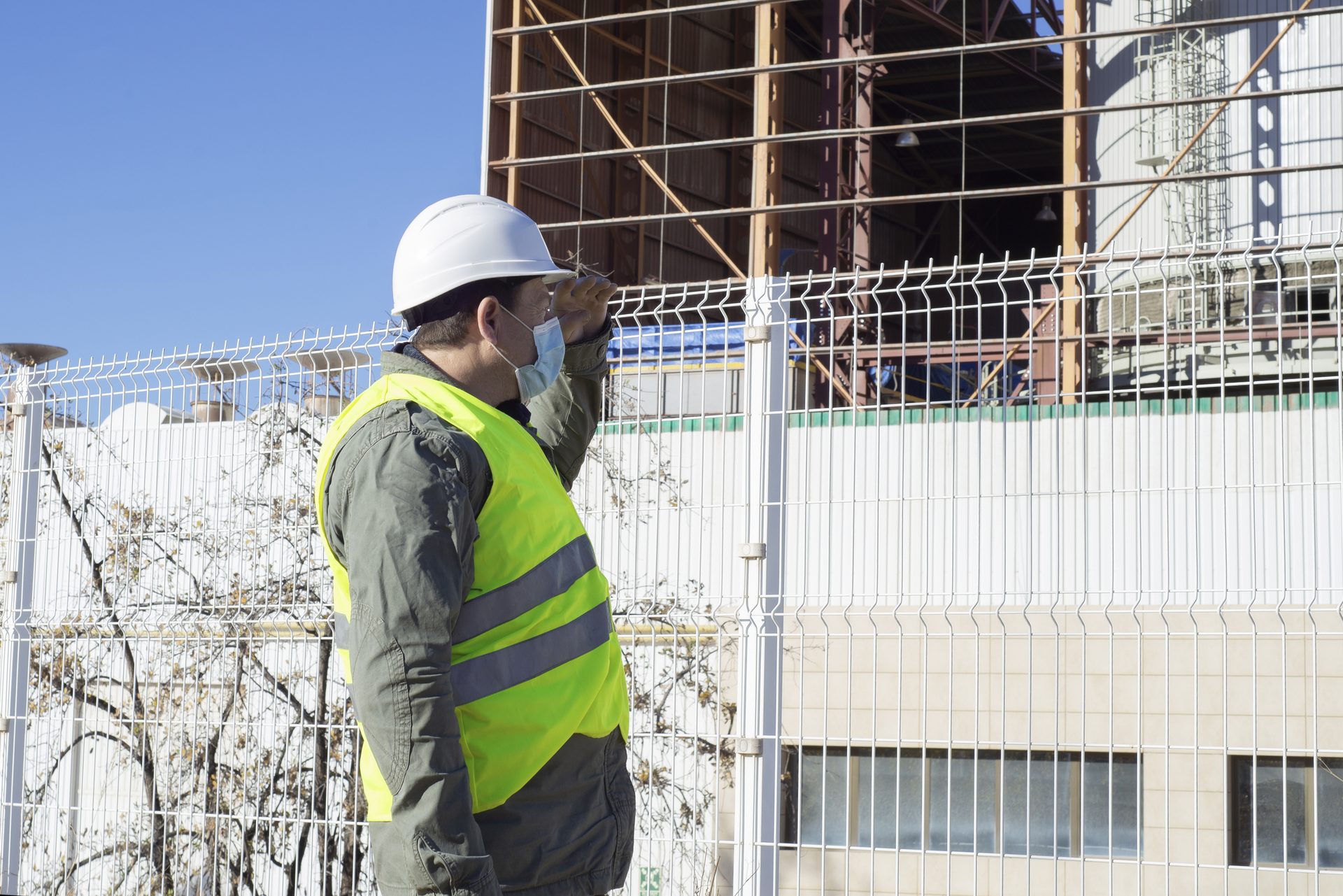
If you run a building site in the capital, you already know how much is sitting on it at any one time: tools, plant, materials, scaffolding, site cabins and often a half-finished building that is a magnet for anyone looking for an easy opportunity. Getting construction security Edinburgh right is not a nice extra. It protects your programme, your insurance position and your profit.
This guide explains the real risks on a construction site, what a sensible security plan looks like, and how to choose a security provider you can trust. It is written in plain English, for site managers, developers and contractors who want straight answers.
Why construction sites are such an easy target
Building sites are attractive to thieves for a simple reason: they hold a lot of valuable, portable kit in a place that is often only lightly protected. Add long periods when nobody is there, such as evenings, weekends and holidays, and you have a lot of time for something to go wrong.
The usual problems are theft of tools, plant and materials, damage to work already completed, trespassing and unauthorised access, vandalism and fly-tipping. In a busy city like Edinburgh there is another factor: sites are often tight, close to public streets and surrounded by passing foot traffic, which makes them easy to look into and easy to walk onto.
A theft is rarely just the cost of the stolen item. You also lose time while replacements are sourced, you may have to pay for temporary cover, and your insurer may ask hard questions about what security was in place. That is why more contractors are treating construction security Edinburgh as part of project planning rather than something to sort out after the first incident.
What a good construction security plan includes
There is no single answer that suits every site. A small refurbishment in the New Town needs a very different approach from a large new build on the edge of the city. A good plan usually combines several layers, so that if one fails, another still protects you.
A secure perimeter. Solid hoarding or fencing, with locked gates and a single, controlled entrance, makes it much harder for someone to wander in. Check it regularly, because gaps and damage tend to appear over time.
Access control. Know who is on site, and when. A simple sign-in and sign-out process for workers, deliveries and visitors helps you spot anything unusual and gives you a clear record if there is ever a dispute.
Lighting. Well-lit sites are less appealing to anyone hoping not to be seen. Motion-activated lighting around stores, cabins and valuable plant is a sensible, low-cost step.
Secure storage. Lock tools and small plant away at the end of every shift, and keep high-value items in secured containers rather than leaving them out in the open. Marking equipment makes it easier to identify and recover.
People on site. Technology helps, but nothing replaces a trained person who can see what is happening, challenge anyone who should not be there and react straight away. That is where security officers come in.
Security guards for construction sites: what they actually do
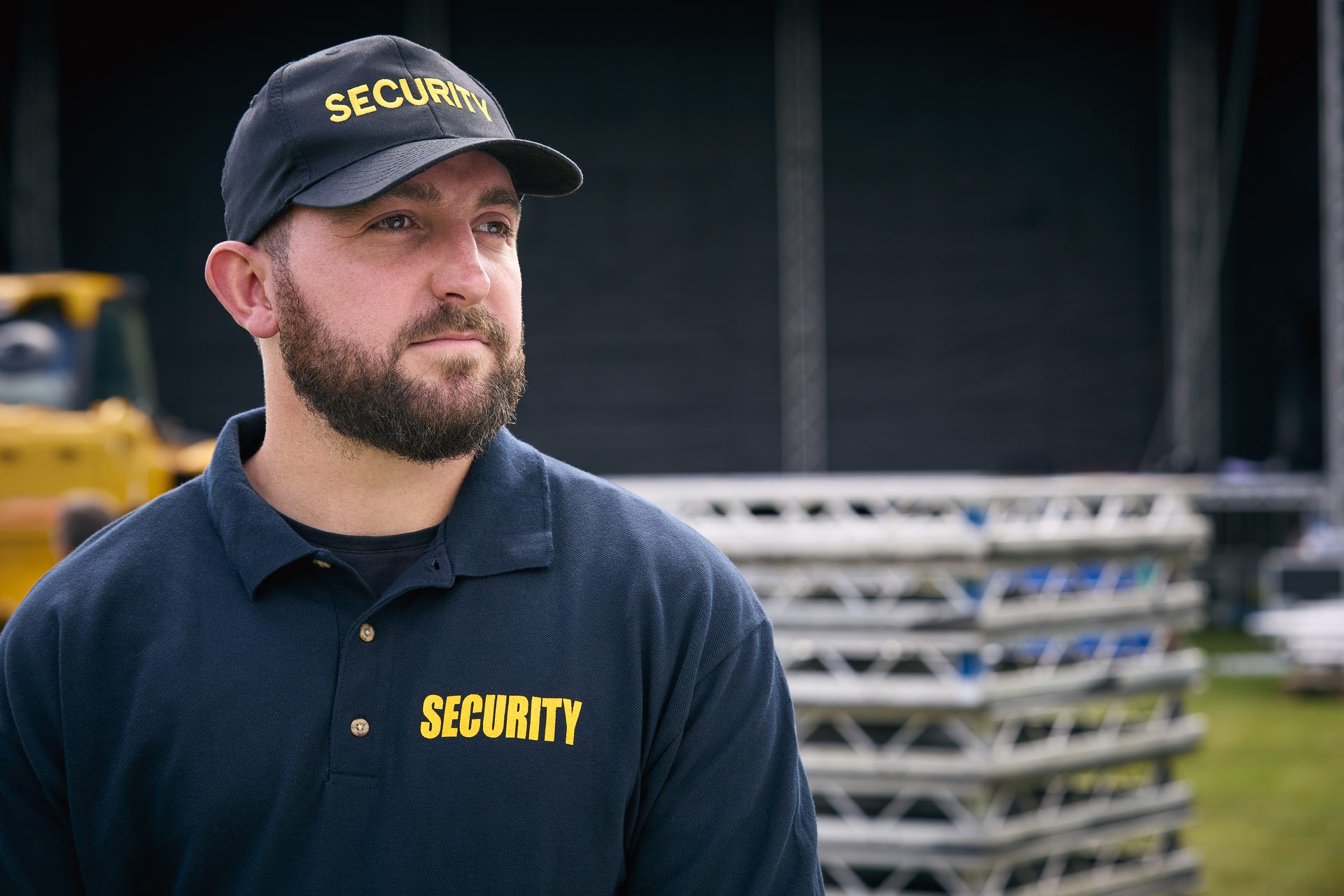
A construction site security guard does far more than stand at a gate. Their job is to deter, observe and respond. On a typical site, that can include controlling access at the entrance, checking deliveries in and out, patrolling the site to look for damage or anything out of place, locking up and checking the site at the end of the day, and keeping a record of everything that happens.
There are two main ways to provide this cover.
Manned guarding. One or more guards are based on site for set hours, usually overnight and at weekends when work stops, but sometimes during the working day too. This is the best option for larger or higher-risk projects, or sites where plant and materials are particularly valuable. Having someone permanently present is also a strong deterrent in its own right.
Mobile patrols. A guard visits your site at random times through the night, checks it over and moves on to the next one. This works well for smaller or lower-risk sites, or as a top-up to other measures. It costs less than a full-time guard, though the site is unattended between visits.
For construction security Edinburgh sites, many contractors use a mix, with manned guarding at the busiest or most vulnerable stages of a project and mobile patrols at quieter times. A good provider will help you work out the right balance rather than simply selling you the most expensive option. If you want to understand how a broader approach fits together, our guide to corporate security services is a helpful place to start.
When does a site need security the most?
The highest-risk times are not always the ones people expect. Overnight and weekends are the obvious ones, but a few other moments deserve particular attention.
The early stages, when the site is being cleared and hoarding goes up, can be vulnerable because the perimeter is not yet complete. The middle of a build, when expensive plant, copper, cabling and materials arrive, is when there is most to steal. And the final stages, when fixtures, fittings and appliances are installed, can be a target for theft just before handover.
Holiday periods, such as Christmas and the Edinburgh Festival season when the city is busy and everyone is distracted, also deserve extra thought. If your site will be empty for several days, plan cover in advance rather than hoping for the best.
How to choose a construction security Edinburgh provider
Not all security companies are the same, and the cheapest quote is rarely the best value. When you are comparing options, these are the questions worth asking.
First, are the officers properly licensed? In the UK, anyone working as a security guard must hold a valid SIA licence. Ask to see it, and make sure the company can show that its people are vetted and trained.
Second, do they understand construction? A site is a very different environment from a shop or an office. Guards should be comfortable with site induction, health and safety rules, protective equipment and the way deliveries and contractors move around.
Third, how do they manage their people? Look for a company that supervises its officers, has clear procedures and can send cover quickly if someone is ill. A guard who does not turn up is worse than no guard at all, because you think the site is protected when it is not.
Fourth, what do they report? Good providers keep a clear record of patrols, incidents and access, and are happy to share it. That paperwork is valuable if you ever need to make an insurance claim.
Fifth, are they local? A provider with a base in Edinburgh can respond faster and understands the city, from its busy city-centre streets to the industrial and housing developments around it. If you are also running events or venues in the area, a company that can cover both is useful. You can see how that works in our guide to licensed event staff in Edinburgh.
Make your security work with your insurance
Your insurer will usually expect reasonable security measures to be in place on a construction site, and the level they expect rises with the value of what is there. It is worth speaking to your broker early, so you know what is required and can build it into your plan from day one.
Keeping good records matters just as much. Photographs of the site, equipment lists with serial numbers, guard reports and incident logs all make a claim simpler if something does go wrong. A security provider that keeps tidy records makes that process far easier.
A practical checklist before work starts
Before your project begins, it helps to run through a few simple questions.
Is the perimeter complete, with locked gates and a single controlled entrance? Is there lighting around stores and valuable equipment? Is there a process for signing people in and out? Where will tools and plant be locked away each night? Who will check the site out of hours, and how will they be reached in an emergency? And does your insurer know what security you have in place?
If you can answer all of those confidently, you are already ahead of many sites. If any of them is a gap, that is the place to start.
Why a social enterprise is a good choice for site security
At GTS Solutions CIC, we are the only certified social enterprise working in the private security industry. That means the work we do for your site also helps create employment opportunities, including for people who find it hard to get into work, with profits reinvested into community projects. You get a professional security service for your construction project, and the money you spend does good in the community around you.
If you would like advice on securing a site, or you are thinking about how best to combine guarding and patrols, our wider experience in security consultancy means we can help you plan the right approach for your project.
Talk to us about construction security in Edinburgh
Every site is different, so the best next step is a conversation. Tell us about your project, where it is, how long it will run and what you are most worried about, and we will help you work out what level of cover makes sense.
You can get in touch with our team at any time, or take a look at the rest of what we do on the GTS Solutions CIC home page. We are always happy to talk it through, with no pressure and no obligation.
Final thoughts
Good site security is mostly about planning. A secure perimeter, controlled access, decent lighting, sensible storage and the right mix of guards and patrols will deter most problems before they start, and make a real difference when something does happen.
Take the time to build a construction security Edinburgh plan that fits your site, choose a provider that is licensed, local and used to construction, and keep good records. Do that, and you will protect not just your equipment, but your programme and your peace of mind.
Share This Story, Choose Your Platform!
About the Author: GTS Solutions