The landscape of public safety in the United Kingdom is undergoing a transformative shift with the introduction of the Terrorism (Protection of Premises) Act 2025. Widely known as Martyn’s Law, this legislation is named in honour of Martyn Hett, one of the twenty-two victims of the 2017 Manchester Arena attack. For venue operators, business owners, and local authorities, understanding the nuances of Martyn’s Law compliance is no longer optional. It is a fundamental requirement of modern operational management that aims to standardise the way we protect citizens in the places they visit for work, leisure, and community engagement.
GTS Solutions, as the only social enterprise in the UK private security industry, recognises that this legislation is more than just a regulatory hurdle. It represents a vital commitment to community resilience and the professionalisation of safety standards across the country. By moving away from a reactive “if it happens” mindset to a proactive “preparedness” culture, we can create public spaces that are both welcoming and secure. This guide explores the essential components of the new duty, the tiered approach to risk, and how organisations can begin their journey toward a safer, more resilient future.
The Legislative Foundation and the Role of the Social Enterprise
At its core, the new legislation seeks to formalise a “Protect Duty” across the UK. This means that those responsible for certain public premises and events must take proportionate measures to reduce the risk of physical harm to the public in the event of a terrorist attack. The law does not expect businesses to become counter-terrorism experts overnight. Instead, it focuses on preparedness, asking duty holders to consider “what if” scenarios and establish clear, actionable procedures that can be executed with confidence under pressure.
The Act was granted Royal Assent in April 2025, triggering a minimum twenty-four month implementation period. This timeline is crucial for businesses as it provides a window to audit current safety protocols without the immediate pressure of enforcement. However, the Security Industry Authority (SIA), which has been appointed as the official regulator, is already encouraging organisations to engage with the principles of the law early. At GTS Solutions, we believe that early adoption is particularly important for community interest companies and local organisations. By integrating safety into the daily culture of a business now, the eventual transition to full legal adherence will be significantly smoother and more cost-effective.
The Two Tier System for Martyn’s Law Compliance
To ensure that the requirements are proportionate to the size of the venue and the potential impact of an incident, the government has established a tiered system based on capacity. Martyn’s Law is divided into the Standard Tier and the Enhanced Tier, each carrying different levels of responsibility and administrative burden.
The Standard Tier: This applies to premises with a capacity of 200 to 799 people. For these venues, the focus is on low-cost, effective preparedness. This includes having a plan for evacuation, “invacuation” (moving people to a safe area within the building), and lockdown procedures. The aim is to ensure that every member of staff understands their role in a crisis, which can be achieved through simple training and regular briefings.
The Enhanced Tier: This applies to venues with a capacity of 800 or more, as well as qualifying public events. These larger locations are required to undergo a formal risk assessment and implement more robust physical security measures. The scrutiny for these venues is higher, as the potential for mass casualties is greater.
The government has carefully curated these thresholds to protect small businesses from being overwhelmed. For example, a small local café with a capacity of fifty people would not fall under the scope of the Act. However, a medium-sized community centre or a large restaurant would likely find themselves in the Standard Tier. Understanding which tier your organisation falls into is the first step in building a compliant safety strategy. It is not just about counting seats; it is about understanding the maximum occupancy during peak times and special events.
Developing Effective Public Protection Procedures
For those in the Standard Tier, the primary goal is to ensure that staff members know exactly what to do when an incident occurs. This involves more than just having a dusty folder on a shelf in a back office. It requires active communication and regular rehearsals of emergency protocols. Effective procedures must cover how staff will alert the public to danger and the specific routes they will use for evacuation or lockdown.
The Home Office has indicated that much of this can be achieved through free resources and internal training. For many small to medium-sized venues, the cost of Martyn’s Law compliance will be minimal if they utilise official guidance from the ProtectUK platform. The emphasis is on “proportionate and practicable” steps. If a venue already has a fire safety plan, much of the logic can be adapted to counter-terrorism, focusing on the unique challenges of a security threat compared to a fire. For instance, while a fire alarm typically signals an immediate exit, a security threat might require a lockdown where staying inside is the safer option.
Staff engagement is the heartbeat of this process. When employees are involved in creating the safety plan, they are more likely to remember it during a high-stress event. We recommend holding regular “tabletop exercises” where staff can discuss different scenarios and identify potential weaknesses in the building’s layout. This collaborative approach not only meets the requirements of the law but also builds a sense of shared responsibility and empowerment among the workforce.
Enhanced Duties and Strategic Risk Management
For larger venues and high-profile events, the stakes are naturally higher. The Enhanced Tier mandates the appointment of a “designated senior individual” who takes personal responsibility for the venue’s security posture. This individual must ensure that a comprehensive terrorism risk assessment is conducted and that a detailed security plan is maintained. This represents a significant shift in corporate accountability, placing safety at the same level of importance as financial reporting or health and safety.
In this context, Martyn’s Law compliance might involve physical security enhancements. These could range from reinforced entry points and hostile vehicle mitigation (HVM) systems to the installation of advanced surveillance technology. However, the legislation remains firm that measures must be “reasonably practicable.” This means the regulator will take into account the resources of the organisation when assessing the adequacy of their security measures. A massive stadium will be expected to have more sophisticated technology than a large community park.
The goal is to build a “ring of steel” that is effective yet remains welcoming to the public, preserving the open nature of our social and commercial spaces. Strategic risk management also involves looking beyond the perimeter of the building. Enhanced Tier venues must consider the “publicly accessible locations” (PALs) immediately surrounding their premises. Working with local police and neighbouring businesses to share intelligence and coordinate response plans is a vital part of the Enhanced Tier duty. This holistic approach ensures that there are no “blind spots” in the local security landscape.
The Role of Training and Social Impact in Security
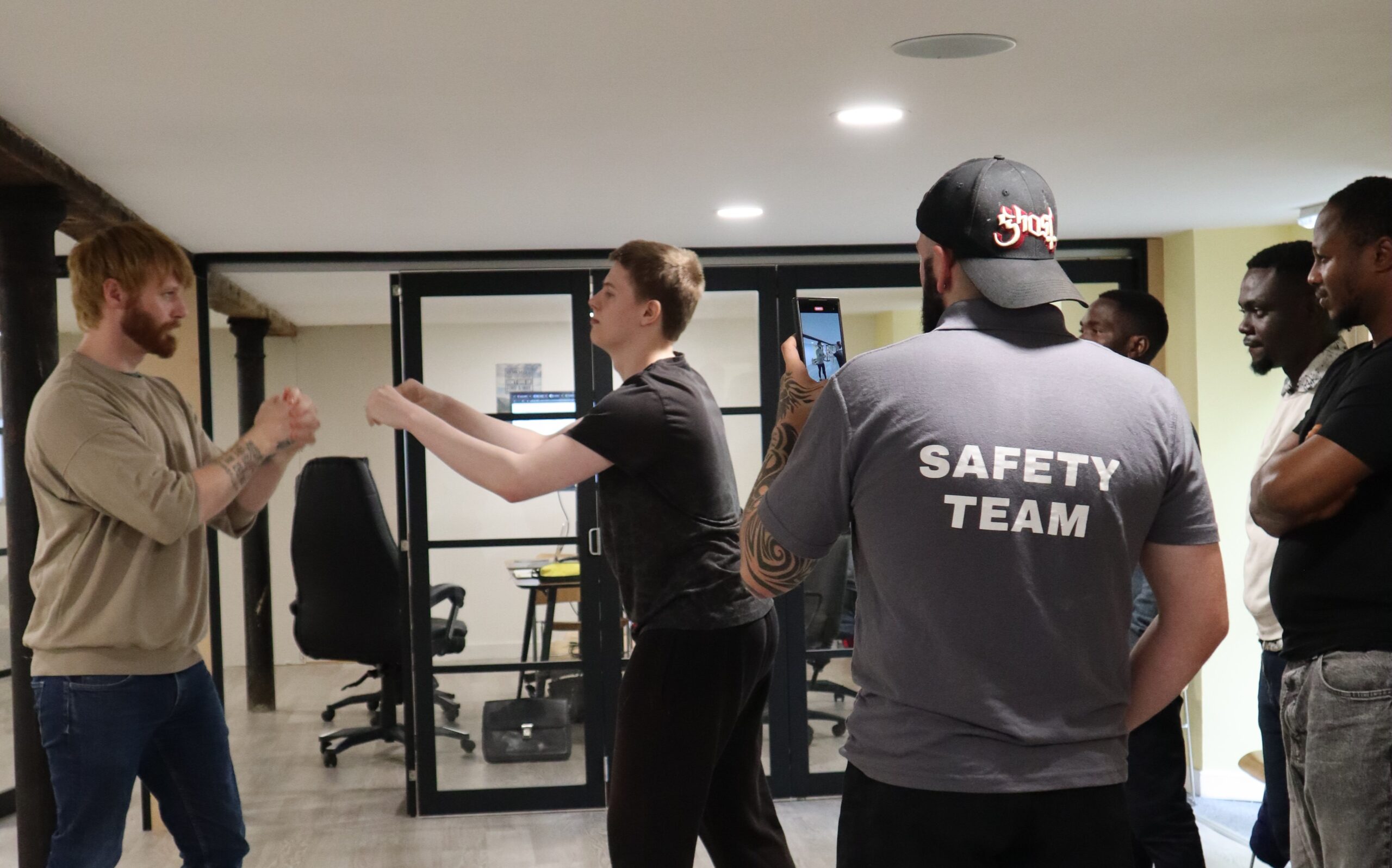
As a Community Interest Company, GTS Solutions understands that security is not just about barriers and cameras. It is about people. Staff training is the most vital component of any security strategy. A well-trained team can identify suspicious behaviour, manage a crowd during a crisis, and provide life-saving first aid in the immediate aftermath of an incident. This human element is what truly makes a venue resilient.
Investing in training is a core requirement for Martyn’s Law compliance, but it also serves a wider social purpose. By upskilling employees from diverse backgrounds and providing them with professional security qualifications through our academy, organisations contribute to the overall resilience of their local community. When workers feel empowered and prepared, they are better able to protect themselves and the public, creating a safer environment for everyone to enjoy. This “social value” of security is a key pillar of our mission at GTS Solutions.
Furthermore, the training mandated by Martyn’s Law can have positive spillover effects into other areas of business operations. Improved situational awareness helps in preventing petty crime, and better communication skills among staff can enhance the overall customer experience. By viewing compliance as an investment in people rather than a mere cost, businesses can foster a culture of excellence. Security becomes an enabler of activity rather than a restriction on it, allowing communities to thrive without the constant shadow of fear.
Frequently Asked Questions
When does Martyn’s Law officially come into force?
The Act received Royal Assent in April 2025. There is a planned implementation period of at least two years, meaning enforcement is not expected to begin until April 2027 at the earliest. This gives businesses and organisations ample time to review their current practices and prepare.
What are the penalties for failing to meet Martyn’s Law compliance?
The regulator, the SIA, has the power to issue compliance and restriction notices. For the most serious breaches in the Enhanced Tier, fines can reach up to £18 million or 5% of a business’s global revenue. For the Standard Tier, fines are smaller but still significant, designed to encourage adherence rather than bankrupt a business.
Do I need to hire an expensive consultant to be compliant?
No, the government has stated that many organisations can meet their obligations using free guidance and internal assessments. However, larger venues in the Enhanced Tier may choose to work with professional partners like GTS Solutions to ensure their technical risk assessments are robust and defensible.
Does the law apply to outdoor events?
Yes, qualifying public events with a capacity of 800 or more that have controlled entry points fall under the Enhanced Tier requirements. This includes festivals, sporting events, and large outdoor concerts. If an event is held in a park but has no defined entrance or ticketing, the rules may differ depending on the specific local authority guidelines.
What is the difference between evacuation and invacuation?
Evacuation involves moving people away from a threat to a safe external location, usually following a pre-planned route. Invacuation is the process of moving people to a specifically designated safe zone within the building, which is often safer during certain types of external threats, such as a marauding attacker or a chemical leak.
Are places of worship included in the legislation?
Yes, places of worship are included in the scope of the Act. However, they are generally placed in the Standard Tier regardless of their capacity to ensure that the burden of compliance does not interfere with religious practice or community access. This ensures they have basic safety plans without the heavy administrative costs of the Enhanced Tier.
How does this law impact insurance premiums for venues?
While not a direct legal requirement of the Act, having a documented history of safety and security preparedness may positively influence insurance assessments. Insurers often look favourably on organisations that can prove they have met or exceeded national safety standards, potentially leading to more stable premiums over time.
Share This Story, Choose Your Platform!
About the Author: GTS Solutions