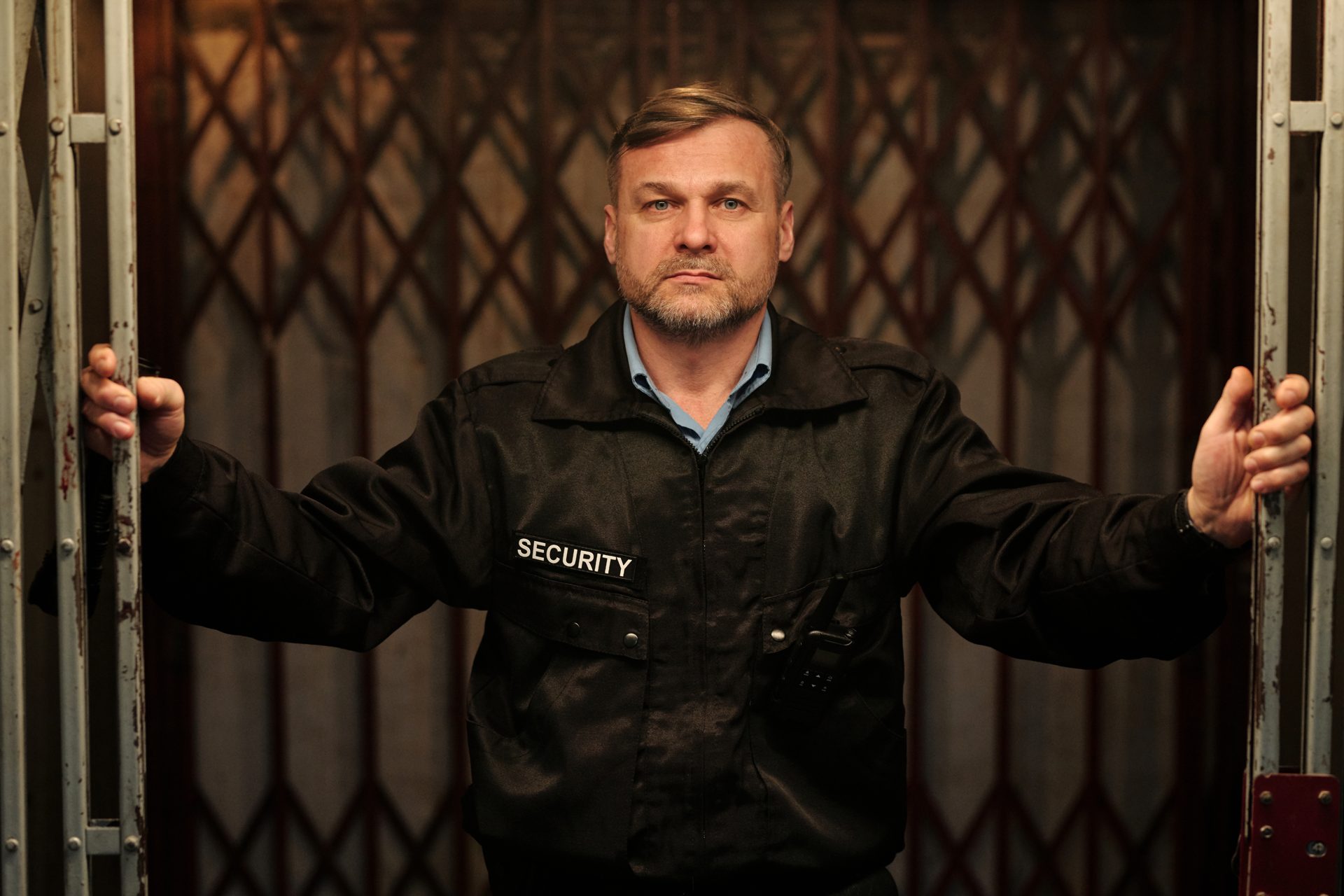
If you are thinking about a career in security, or you need to hire someone for your venue, event or premises, you will quickly come across two job titles that sound similar: security guard and door supervisor. Many people assume the roles are the same thing with a different name. They are not, and knowing the security guard vs door supervisor difference helps you choose the right training, the right licence and the right people.
At GTS Solutions CIC we train and supply licensed security staff in Edinburgh and across Scotland, so we are asked this question all the time. This guide explains what each role does, how the licences differ, where each person works, and how to decide which route suits you or which you need to hire.
Security guard vs door supervisor: the short answer
A security guard looks after property, premises and people, usually from a fixed post or on patrol. A door supervisor controls who enters and stays in a licensed venue, such as a pub, club, bar or event, and deals directly with customers and crowds.
Both roles are regulated in the UK by the Security Industry Authority, known as the SIA, and both require an SIA licence. They are, however, separate licensable activities with their own training, and they are not interchangeable. Working in either without the correct licence is a criminal offence for the person and for anyone who knowingly uses them.
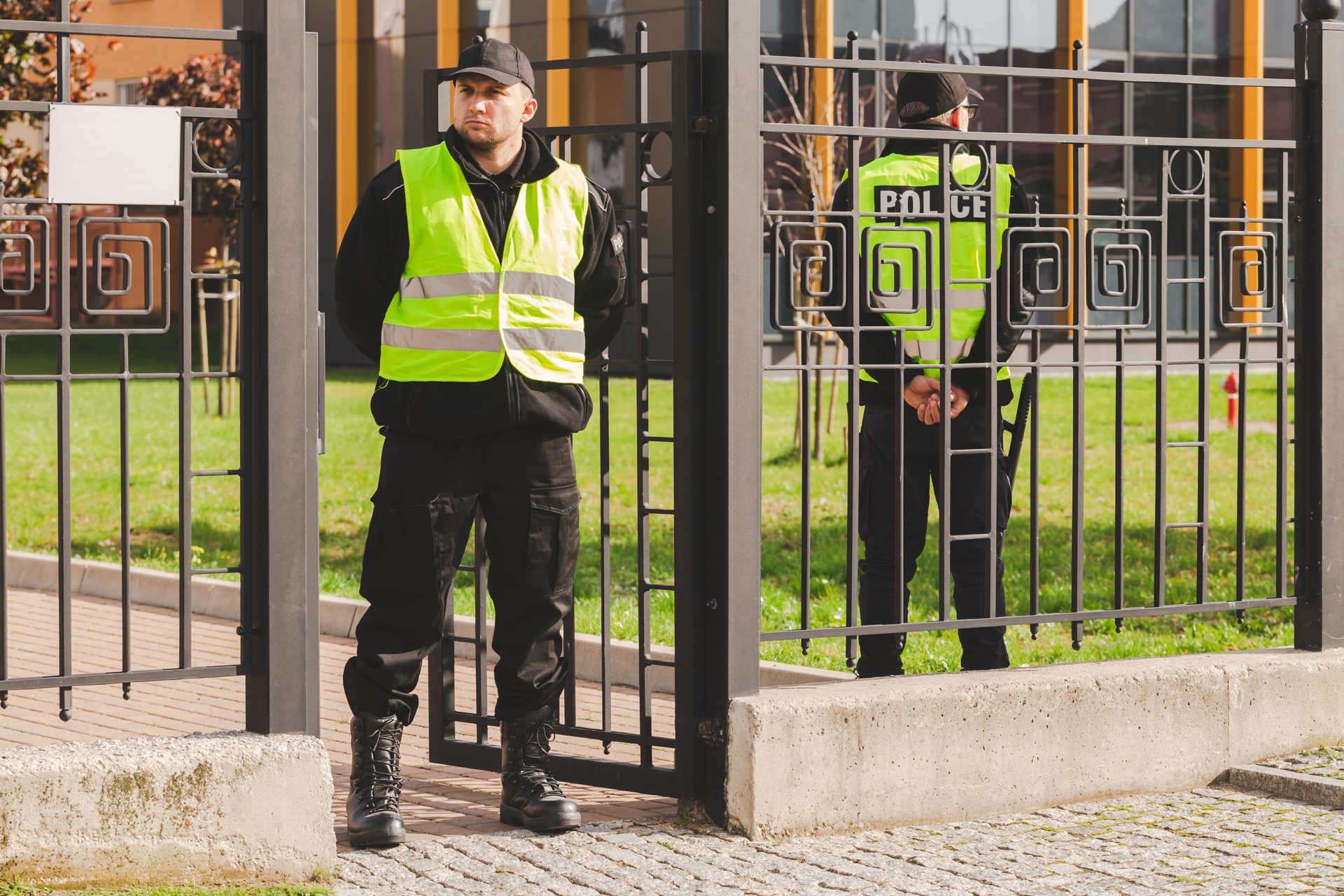
What does a security guard do?
Security guards protect buildings, sites and assets. Typical duties include:
- Patrolling premises, car parks and perimeters, either on foot or via CCTV.
- Controlling access at gates, reception desks or loading bays.
- Checking passes and logging visitors and vehicles.
- Responding to alarms, incidents or suspicious behaviour.
- Writing clear reports and keeping accurate records.
- Acting as a visible deterrent to theft, vandalism and trespass.
Guards work in a wide range of places, including offices, shopping centres, hospitals, warehouses, building sites, schools and retail stores. The work can be quiet and steady, or fast moving if there is an incident, but it is generally less about dealing with large numbers of customers and more about watching, reporting and protecting.
Construction is a good example. A site may need guards to prevent theft of plant and materials overnight, which we cover in our guide to construction security in Edinburgh.
What does a door supervisor do?
Door supervisors are the people you see at the entrance to pubs, bars, nightclubs and licensed events. Their job is to keep the venue safe and make sure the people inside are there legally and behaving appropriately. Typical duties include:
- Checking ID and age at the door and refusing entry where needed.
- Monitoring capacity and managing queues.
- Searching bags and people where the venue policy allows.
- Spotting signs of intoxication, drug use and aggression.
- De-escalating arguments and removing people who break venue rules.
- Helping vulnerable customers, for example someone who is unwell or separated from friends.
- Working with the police, paramedics and venue managers during emergencies.
This is a more people-focused role. It requires confidence, calm communication and good judgement, often late at night and in busy environments. We looked at how people balance this work with study in our article on a student can be a door supervisor in Edinburgh.
How the SIA licences differ
The SIA issues different licences for different types of work. The two we are discussing here are the security guard licence and the door supervisor licence. Each one authorises a specific activity and requires specific training.
To apply for either, you generally need to:
- Be at least 18 years old.
- Pass an identity check and prove you have the right to work in the UK.
- Complete an approved training course from an SIA-endorsed provider and gain the qualification for that licence.
- Pass a criminal record check, because certain convictions may prevent you from being licensed.
- Pay the SIA licence fee and apply through the SIA.
Licences usually last three years before they must be renewed. We explain the renewal process in detail in our guide to SIA licence renewal in Edinburgh, although the key point here is to check the type of licence you hold matches the work you are doing.
Training: what you will learn
Training for the two roles shares a common core but then diverges.
Security guard training
Security guard courses cover the law and responsibilities of the role, emergency procedures, patrolling, access control, health and safety, communication skills and conflict management. The emphasis is on observation, reporting and procedure.
Door supervisor training
Door supervisor courses include the same legal and safety basics but add a strong focus on dealing with customers, spotting intoxication, searching, eviction techniques and physical intervention skills. Because door staff are more likely to face confrontation, the training includes more scenarios and practice.
Course content and requirements are set by the SIA and the awarding bodies, so always choose an approved provider and check what the course includes. Our guide to an affordable SIA licence course in Edinburgh explains what to look for and how to choose.
Where does each role work?
The working environments are quite different, which is often the deciding factor.
- Security guards: offices, retail parks, hospitals, schools, construction sites, warehouses, car parks, hotels and residential developments.
- Door supervisors: pubs, bars, clubs, festivals, concerts, sports venues and other licensed premises or events.
Some people hold both licences so they can move between daytime guarding and evening door work. This adds flexibility and can increase earning options, as long as each licence is current and used for the right job.
A typical shift for each role
It helps to picture what a normal working day looks like. A security guard on a retail park might start by checking in with the outgoing shift, reviewing the incident log and walking the site to check doors, gates and lighting. Through the shift they greet staff and visitors, check deliveries, monitor cameras and write up anything unusual. If an alarm goes off or someone is acting suspiciously, they follow procedure, call for support if needed and record what happened.
A door supervisor at a busy city centre venue has a very different evening. They arrive before opening to brief with the manager and check the entrance and fire exits. Once the doors open, they check ID, count people in and out, and keep an eye on the queue and the crowd. Later in the night they may deal with a customer who has had too much to drink, break up a disagreement, or help someone who feels unwell. At closing time they help people leave safely and calmly.
The comparison between a security guard and a door supervisor is really a comparison between observing and protecting a place, and managing and protecting people in it. Both matter, and both depend on training, professionalism and the right licence.
Skills that matter in both roles
Whichever route you take, a handful of qualities make the biggest difference. Clear communication helps you explain rules without escalating a situation. Staying calm lets you think when others are stressed. Good observation spots problems early, and honest, accurate reporting protects you and your employer if anything is questioned later. Fitness, reliability and turning up on time matter too, because security teams depend on each other.
Employers and venues also value people who treat everyone with respect. The best security staff are rarely the loudest or the biggest. They are the ones who defuse trouble before it starts.
Which role suits you?
If you are weighing security guard vs door supervisor as a career, ask yourself a few honest questions.
- Do you prefer a steady routine, with lots of time to focus and observe, or a fast-paced environment with constant interaction? Guarding leans towards the first, door work towards the second.
- Are you comfortable dealing with intoxicated or aggressive people? If so, door supervision could suit you.
- Do you want regular daytime hours, or are you happy to work evenings, nights and weekends?
- Are you interested in a long-term career path, such as supervisory roles, CCTV or close protection, or in earning quickly while you study?
There is no wrong answer. Many people begin as guards and then add a door supervisor licence later, or the other way around. Our article on job opportunities with a security guard licence in Edinburgh explains the sort of roles open to licensed staff.
Which do you need to hire?
If you run a venue, an event or a business, the decision is just as important. Choose the type of security based on what you need to protect and what can go wrong.
- If you are managing a licensed bar, club or event where customers are drinking, you will almost certainly need door supervisors. Licensing conditions often require them.
- If you need to protect premises, stock, equipment or a building site when there are few people around, security guards or mobile patrols are the usual answer.
- If you run a large event, you may need both, plus stewards and a clear plan for crowd management. Our guide on licensed event staff in Edinburgh explains how the pieces fit together.
Whatever you choose, always check that every person on duty holds a valid SIA licence for the job they are doing, and ask to see it. The licence should show the type, the expiry date and the person’s photograph.
Common mistakes to avoid when comparing roles
- Treating security guard vs door supervisor as a single job, or assuming one licence covers every type of security work, when the SIA licenses each activity separately.
- Hiring unlicensed staff because they appear cheaper. The legal risk is far greater than the saving.
- Choosing training only on price rather than quality, approval and support after the course.
- Ignoring licence expiry dates, which can leave you unable to work until renewed.
- Forgetting that new rules such as Martyn’s Law are changing what venues must do about public safety and counter-terrorism.
Questions people often ask
Can a door supervisor work as a security guard?
The two licences cover different activities, so you should check with the SIA which licence is needed for the work you intend to do. If you want to do both, it is safest to hold both licences.
Which role pays more?
Pay varies by employer, location, hours and experience. Door work is often paid at higher rates for evenings and events, while guarding can offer more regular hours. Compare real job offers rather than assuming.
Do I need a licence if I am only working part time or for a small event?
Yes. If the work is a licensable activity, a licence is needed regardless of how many hours you work. Event organisers have a responsibility to check this.
How long does it take to get licensed?
Training courses usually take a few days. Once you have the qualification, the SIA application and checks add some time, so it is wise to start early if you need to be working by a particular date.
Speak to GTS Solutions CIC
Whether you want to start a career in security or you need licensed staff for your venue, event or site, we are here to help. Get in touch with our team and tell us what you need, or visit our home page to see our security, training and consultancy services. We will give you straight, practical advice on the right licence, the right training and the right people for the job.
Share This Story, Choose Your Platform!
About the Author: GTS Solutions